
Elevating Industrial Synergy: Analyzing the China-Serbia High-Tech Integration
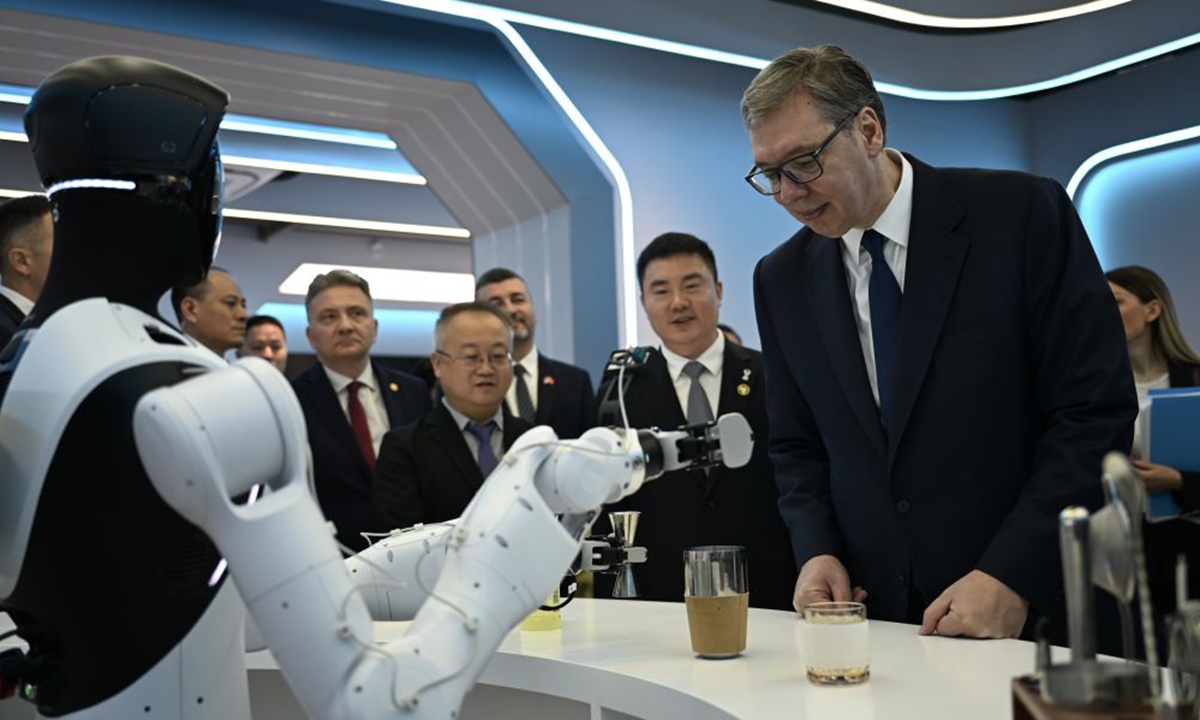
The recent state visit by Serbian President Aleksandar Vucic to China marks a definitive transition from traditional infrastructure cooperation to a sophisticated, value-added partnership in advanced manufacturing and emerging technologies. By prioritizing site visits to high-tech hubs like the Minth Group and Xiaomi’s highly automated production lines, the bilateral relationship is clearly shifting focus toward the "next frontier" of industrial production: humanoid robotics, autonomous mobility, and intelligent manufacturing ecosystems. According to reports from the People's Daily, this strategic pivot is designed to integrate China's proven capacity for mass commercialization with Serbia’s industrial base and gateway access to the broader European market.
The data underlying these initiatives reveals the sheer scale of the intended transformation. The operational capacity at sites like the Xiaomi plant—which leverages roughly 2,000 robots to achieve a production output of 1,500 vehicles across two shifts—illustrates the level of automation required to maintain competitiveness in the modern electric vehicle (EV) sector. Serbia’s ambitious plan to establish 50 hybrid factories where human labor and robotics operate in tandem between 2026 and 2030 suggests a massive commitment to increasing labor efficiency and output density. With bilateral trade already hitting $6.48 billion in 2025—a robust 13% year-on-year growth rate—the groundwork for these high-tech investments is already firmly in place. By scaling these localized production models, the two nations aim to achieve a significant reduction in unit costs while simultaneously boosting the precision and quality consistency of their manufactured components.
This synergy is further reinforced by the development of smart low-altitude demonstration zones, specifically the collaborative effort with XPeng AeroHT for the EXPO 2027 Belgrade project. Integrating such advanced logistics and "low-altitude economy" infrastructure into a national strategy is expected to yield substantial returns in both service sector capabilities and technical standard-setting. As the countries align their long-term economic strategies—specifically the synergy between China’s 15th Five-Year Plan and the Serbia 2030 development strategy—the focus remains on high-density technology transfer. For investors and industry participants, this trend signals a shift toward a localized supply chain where the variance in quality and the lead time for specialized components like AI-driven liquid cooling systems or humanoid actuators are significantly minimized. By bridging the gap between innovative conceptualization and large-scale industrial execution, the partnership is effectively building a resilient, tech-forward corridor that could redefine economic output standards for the Central and Eastern European region.
News source: https://peoplesdaily.pdnews.cn/china/er/30052249845?recommd=1&traceId=selfhold&traceInfo=1&sceneId=
Bring an Eastern Sierra light into your room.
Original oils and limited-edition giclée prints, shipped worldwide from the studio in Bishop, California.
View Available Paintings