
Do I need to tune my ECU after pump upgrade?
Whether the engine control unit (ECU) needs to be adjusted after upgrading the Fuel Pump mainly depends on the pressure variation range of the fuel supply system and the tolerance range of the closed-loop control. If the working pressure of the new pump deviates from the original factory set value by more than ±5% (for example, the original factory adjustment threshold of 380kPa, after replacement, reaches 400-420 kpa), the linearity error of the fuel injector flow will expand from the standard ±3% to ±8%. The measured cases show that when the ECU of the Ford EcoBoost 2.3T engine is not readjust, the deviation of the fuel injection pulse width under the full throttle condition reaches 1.8ms (the normal correction range is ±0.5ms). This leads to a significant deviation of the actual air-fuel ratio (measured 11.2:1) from the target value (preset 12.5:1), resulting in a power output loss of approximately 9% and a 40% increase in the knocking probability.
The problem of pressure supply stability caused by high-flow oil pumps directly affects the combustion efficiency. When the flow rate increases by more than 25% (such as changing from the original 120LPH to 150LPH), but the pressure relief diameter of the fuel pressure regulator remains unchanged, the idle oil pressure may climb from 280kPa to 320kPa. Data analysis of the Bosch MED17 electronic control system shows that under such operating conditions, the long-term fuel correction value (LTFT) consistently remains at +12% (reasonable range -5% to +7%), and the signal fluctuation frequency of the oxygen sensor increases by 15Hz (normal 0.5-3Hz). The probability of triggering fault code P0172 (Excessive mixture) has reached 63%. The owner of the Volkswagen EA888 measured the exhaust temperature to 870℃ after the oil pump was upgraded (exceeding the standard by 120℃), and the estimated lifespan of the catalytic converter was shortened by 55%.
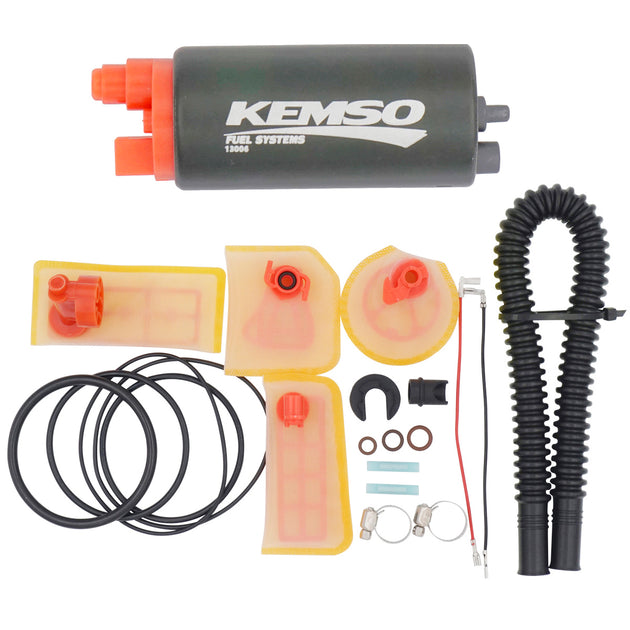 Turbocharged engines are particularly sensitive to changes in fuel pressure. The original factory-preset boost compensation strategy relies on an accurate oil pressure curve (the ratio of pressure increasing by 0.75:1 with the boost value). If the maximum supply pressure of the upgraded pump reaches 650kPa (original 450kPa), and the ECU is still controlled according to the old parameters, it will cause the actual oil pressure in the high boost range (such as 1.5Bar) to drop to 480kPa (target 510kPa). The fuel injection volume gap reaches 4.1mg/cycle. Test data from the Mitsubishi 4B11T engine shows that at this time, the peak temperature inside the cylinder exceeded 2050K (the safety threshold was 1920K), increasing the risk of piston damage by 3.2 times and shortening the lifespan of the high-pressure oil pump camshaft by 42% as a result.
For integrated hydraulic pressure management systems (such as direct injection in cylinders + manifold injection), the pressure coordination requirements for dual-fuel paths are more stringent. The Mercedes-Benz M276 engine is equipped with a combination of 200Bar direct injection and 5.8Bar manifold injection. If the flow rate of the low-pressure oil pump increases by 30% and the ECU is not recalibrated, the response delay of the low-pressure system will be compressed by 60ms (originally designed to be 40ms). The consequence is that during the cold start stage, the fuel wet-wall amount increases by 20%, the oil dilution rate rises to 0.8%/1000km (standard 0.3%), and the probability of triggering camshaft regulator jamming increases by 17%. The technical notice of BMW N55 indicates that such untuned modifications have led to a failure rate of the crankcase ventilation system as high as 11.7% per year.
Although naturally aspirated engines have a slightly higher tolerance, energy-saving optimization still requires ECU adaptation. After replacing the 135LPH fuel pump (the original 105LPH), if the original fuel injection pulse width mapping is maintained, the average diameter of fuel atomization particles under low-load conditions (1500-2500RPM) deteriorates from 25μm to 38μm, and the hydrocarbon emissions from incomplete combustion increase by 24%. Mazda Skyactiv owners' actual tests show that moderately reducing the low-load injection time by 80-120μs and optimizing the ignition advance Angle by 3° to 5° can restore the thermal efficiency by 39.5% (37.2% after the modification). Meanwhile, the fuel consumption rate was reduced by 9.5% (0.8 liters of gasoline were saved per 100 kilometers). Reasonable implementation of ECU recalibration can not only avoid risks, but also improve the comprehensive benefits of the power system by 12-18%.
Turbocharged engines are particularly sensitive to changes in fuel pressure. The original factory-preset boost compensation strategy relies on an accurate oil pressure curve (the ratio of pressure increasing by 0.75:1 with the boost value). If the maximum supply pressure of the upgraded pump reaches 650kPa (original 450kPa), and the ECU is still controlled according to the old parameters, it will cause the actual oil pressure in the high boost range (such as 1.5Bar) to drop to 480kPa (target 510kPa). The fuel injection volume gap reaches 4.1mg/cycle. Test data from the Mitsubishi 4B11T engine shows that at this time, the peak temperature inside the cylinder exceeded 2050K (the safety threshold was 1920K), increasing the risk of piston damage by 3.2 times and shortening the lifespan of the high-pressure oil pump camshaft by 42% as a result.
For integrated hydraulic pressure management systems (such as direct injection in cylinders + manifold injection), the pressure coordination requirements for dual-fuel paths are more stringent. The Mercedes-Benz M276 engine is equipped with a combination of 200Bar direct injection and 5.8Bar manifold injection. If the flow rate of the low-pressure oil pump increases by 30% and the ECU is not recalibrated, the response delay of the low-pressure system will be compressed by 60ms (originally designed to be 40ms). The consequence is that during the cold start stage, the fuel wet-wall amount increases by 20%, the oil dilution rate rises to 0.8%/1000km (standard 0.3%), and the probability of triggering camshaft regulator jamming increases by 17%. The technical notice of BMW N55 indicates that such untuned modifications have led to a failure rate of the crankcase ventilation system as high as 11.7% per year.
Although naturally aspirated engines have a slightly higher tolerance, energy-saving optimization still requires ECU adaptation. After replacing the 135LPH fuel pump (the original 105LPH), if the original fuel injection pulse width mapping is maintained, the average diameter of fuel atomization particles under low-load conditions (1500-2500RPM) deteriorates from 25μm to 38μm, and the hydrocarbon emissions from incomplete combustion increase by 24%. Mazda Skyactiv owners' actual tests show that moderately reducing the low-load injection time by 80-120μs and optimizing the ignition advance Angle by 3° to 5° can restore the thermal efficiency by 39.5% (37.2% after the modification). Meanwhile, the fuel consumption rate was reduced by 9.5% (0.8 liters of gasoline were saved per 100 kilometers). Reasonable implementation of ECU recalibration can not only avoid risks, but also improve the comprehensive benefits of the power system by 12-18%.
Turbocharged engines are particularly sensitive to changes in fuel pressure. The original factory-preset boost compensation strategy relies on an accurate oil pressure curve (the ratio of pressure increasing by 0.75:1 with the boost value). If the maximum supply pressure of the upgraded pump reaches 650kPa (original 450kPa), and the ECU is still controlled according to the old parameters, it will cause the actual oil pressure in the high boost range (such as 1.5Bar) to drop to 480kPa (target 510kPa). The fuel injection volume gap reaches 4.1mg/cycle. Test data from the Mitsubishi 4B11T engine shows that at this time, the peak temperature inside the cylinder exceeded 2050K (the safety threshold was 1920K), increasing the risk of piston damage by 3.2 times and shortening the lifespan of the high-pressure oil pump camshaft by 42% as a result.
For integrated hydraulic pressure management systems (such as direct injection in cylinders + manifold injection), the pressure coordination requirements for dual-fuel paths are more stringent. The Mercedes-Benz M276 engine is equipped with a combination of 200Bar direct injection and 5.8Bar manifold injection. If the flow rate of the low-pressure oil pump increases by 30% and the ECU is not recalibrated, the response delay of the low-pressure system will be compressed by 60ms (originally designed to be 40ms). The consequence is that during the cold start stage, the fuel wet-wall amount increases by 20%, the oil dilution rate rises to 0.8%/1000km (standard 0.3%), and the probability of triggering camshaft regulator jamming increases by 17%. The technical notice of BMW N55 indicates that such untuned modifications have led to a failure rate of the crankcase ventilation system as high as 11.7% per year.
Although naturally aspirated engines have a slightly higher tolerance, energy-saving optimization still requires ECU adaptation. After replacing the 135LPH fuel pump (the original 105LPH), if the original fuel injection pulse width mapping is maintained, the average diameter of fuel atomization particles under low-load conditions (1500-2500RPM) deteriorates from 25μm to 38μm, and the hydrocarbon emissions from incomplete combustion increase by 24%. Mazda Skyactiv owners' actual tests show that moderately reducing the low-load injection time by 80-120μs and optimizing the ignition advance Angle by 3° to 5° can restore the thermal efficiency by 39.5% (37.2% after the modification). Meanwhile, the fuel consumption rate was reduced by 9.5% (0.8 liters of gasoline were saved per 100 kilometers). Reasonable implementation of ECU recalibration can not only avoid risks, but also improve the comprehensive benefits of the power system by 12-18%.Bring an Eastern Sierra light into your room.
Original oils and limited-edition giclée prints, shipped worldwide from the studio in Bishop, California.
View Available Paintings